Sunken concrete is something many homeowners in NYC, Brooklyn, Queens, the Bronx, and Long Island see every day. A sidewalk that dips. A driveway slab that sinks. A patio that no longer drains right. At first, it may not seem like a big deal.
But sometimes, sunken concrete is more than just an eyesore. In certain situations, it can become a real safety risk and even lead to costly damage if it is ignored.
This guide explains when sunken concrete is dangerous, when it is less urgent, and how NYC homeowners can fix it before it turns into a bigger problem.
What Is Sunken Concrete and Why It Happens in NYC
Sunken concrete happens when the soil underneath a concrete slab shifts, washes away, or compresses. The concrete itself usually stays strong, but without proper support below, it sinks.
In NYC and Long Island, this happens more often because of heavy rain, poor drainage, and older soil conditions. Many homes in Brooklyn, Queens, and the Bronx were built decades ago, and the soil under sidewalks, driveways, and basement slabs has been settling for years.
Freeze and thaw cycles also play a big role. Water gets under the concrete, freezes in winter, and expands. When it melts, it leaves empty space behind. Over time, those small voids cause slabs to sink.
When Sunken Concrete Becomes Dangerous
Not all sunken concrete is an emergency. But there are clear situations where it should not be ignored.
Trip and Fall Hazards
Uneven concrete is one of the most common causes of trips and falls. Even a small height difference between slabs can be dangerous, especially on sidewalks, walkways, and front steps.
In busy NYC neighborhoods, this is a serious concern. If someone trips and gets hurt, homeowners and property owners may be held responsible.
Water Drainage Problems
When concrete sinks, water no longer drains the way it should. Instead of flowing away from the home, water collects in low spots.
Standing water near your foundation can slowly wash away soil, increase moisture around basement walls, and raise the risk of leaks and water damage.
Stress on Nearby Structures
Sunken concrete can pull against nearby slabs, foundations, and walls. Over time, this stress can lead to cracks, shifting, and uneven pressure on the structure of the home.
This is especially important for older NYC homes where foundations are already under strain from age and soil movement.
Winter Ice Risks
In winter, sunken areas collect water that freezes overnight. These icy patches are easy to miss and extremely slippery.
In places like Brooklyn, Queens, and Long Island, where winters bring repeated freeze and thaw cycles, this can turn a small dip in the concrete into a seasonal safety hazard.
Areas Around Your Home Where Sunken Concrete Is Most Risky
Some areas are more dangerous than others when concrete begins to sink.
Sidewalks and walkways are high-risk because they are used daily and often by guests, delivery workers, and neighbors.
Driveways and garage slabs can cause vehicle damage and allow water to flow toward the home instead of away from it.
Patios and outdoor spaces often develop pooling water, which can spread damage to nearby slabs and walls.
Basement and interior concrete slabs are especially risky because problems are harder to see. Moisture issues under basement slabs can lead to mold, odors, and long-term water damage.
Signs Sunken Concrete Needs Immediate Attention
Sunken concrete should be checked right away if you notice uneven slab edges that catch your foot when walking, water pooling after rain, cracks forming near the sunken area, or slabs that feel loose or move slightly.
If the same spot freezes into ice every winter, that is also a sign the concrete has settled and is trapping water.
When Sunken Concrete Is Less Urgent
Some settling is minor and stable. If the concrete has not moved in years, does not create a trip hazard, and does not affect drainage, it may not require immediate repair.
However, even small issues should be monitored. What looks harmless today can become a bigger problem after one heavy storm or winter season.
Why Ignoring Sunken Concrete Costs More Over Time
Sunken concrete rarely fixes itself. As water continues to move under the slab, the soil weakens further and the sinking gets worse.
What could have been a simple repair often turns into cracked concrete, drainage problems, or full replacement if ignored too long. Acting early usually saves money and prevents damage to nearby areas.
How NYC Homeowners Can Fix Sunken Concrete Without Replacement
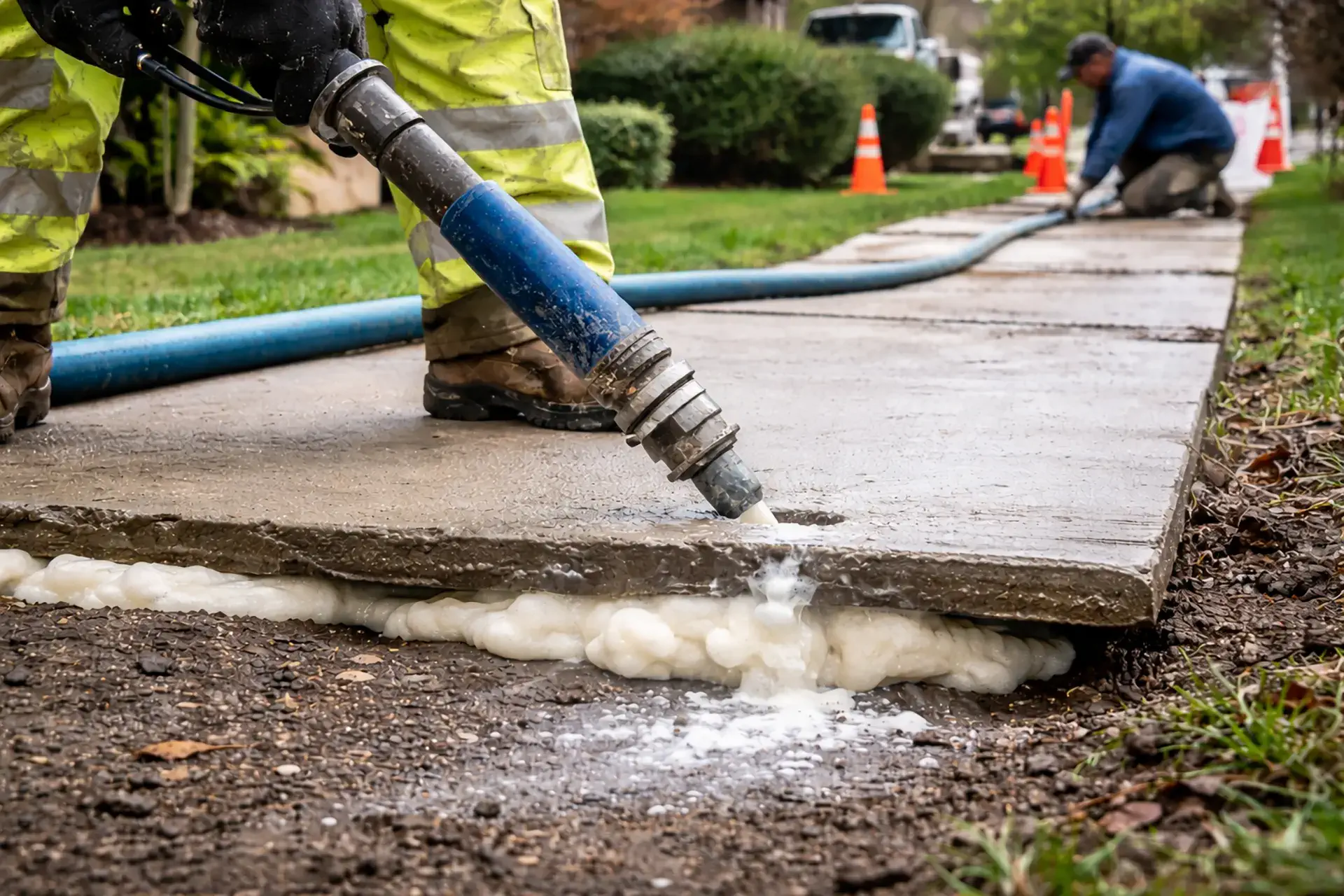
In many cases, sunken concrete does not need to be removed or replaced. Mudjacking is a proven method that lifts the existing slab by filling the empty space underneath it.
This process works well in NYC and Long Island because it stabilizes the soil, improves drainage, and restores the concrete to its proper level without major disruption. It is commonly used for sidewalks, driveways, patios, and even interior slabs.
When to Call a Professional for an Inspection
You should consider a professional inspection if the concrete continues to sink, water is collecting near your home, or the area is walked or driven on every day.
Early inspections help identify the cause of the problem and prevent it from spreading to other parts of the property.
Final Thoughts
Sunken concrete is common in NYC, Brooklyn, Queens, the Bronx, and Long Island. While not every case is dangerous, some situations should never be ignored.
Understanding the warning signs and acting early can protect your home, improve safety, and prevent costly repairs later on.
If you are unsure whether sunken concrete around your home is a risk, getting it inspected is the safest next step.
Frequently Asked Questions From NYC Homeowners
Is sunken concrete dangerous?
Sunken concrete becomes dangerous when it creates trip hazards, traps water, or affects nearby structures.
Can sunken concrete cause foundation problems?
Yes. Over time, poor drainage and soil movement near sunken slabs can contribute to foundation stress and cracks.
Is mudjacking permanent in New York’s climate?
When done correctly, mudjacking provides long-lasting results and is well-suited for NYC soil and weather conditions.
How fast does sunken concrete get worse?
This depends on drainage and weather, but heavy rain and freeze-thaw cycles can accelerate the problem quickly.
Can sunken concrete be fixed in winter?
Some repairs can be done in colder months, but conditions matter. A professional inspection will determine the best timing.