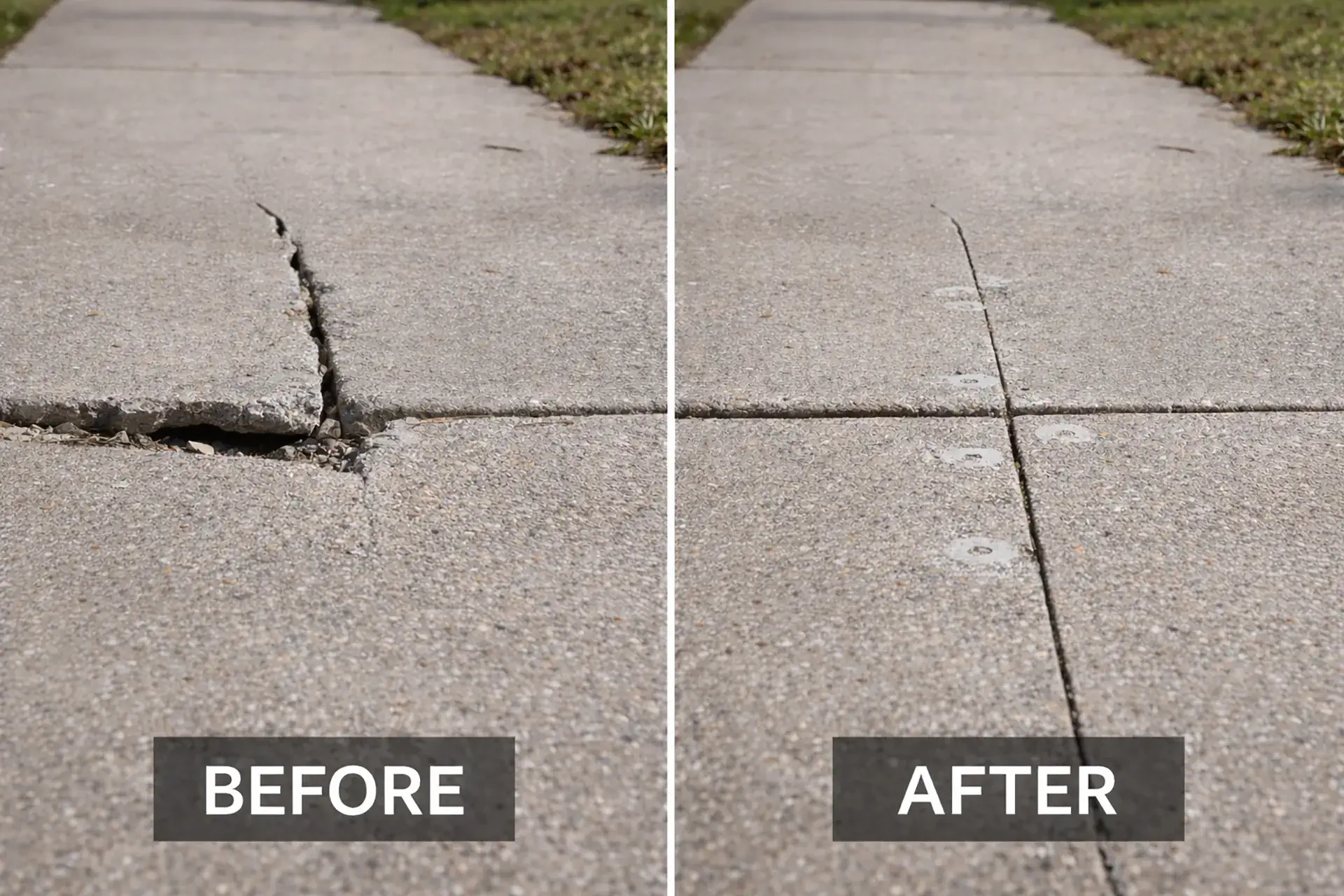
Concrete joint failure is one of the most common early warning signs of serious problems under your concrete. What often looks like a small gap or uneven joint is usually caused by void formation beneathf concrete. If ignored, this problem can spread and lead to cracking, sinking, and costly replacement.
This guide explains what causes concrete joint failure, why voids form under concrete, the risks of waiting, and how mudjacking fixes the problem without tearing out your slab.
What Is Concrete Joint Failure
Concrete joints are designed to allow movement and control cracking. When the soil beneath concrete shifts or washes away, these joints lose support. As a result, the concrete begins to separate, sink, or become uneven.
Joint failure is often one of the first visible signs that voids are forming beneath the slab. These voids leave sections of concrete unsupported, which causes movement and damage over time.
What Causes Void Formation Beneath Concrete
Void formation beneath concrete happens when the soil under the slab is no longer stable. This usually occurs slowly and is easy to miss at first.
Water is the most common cause. Rainwater, poor drainage, plumbing leaks, or runoff can wash soil away from under concrete. Over time, this creates empty spaces beneath the slab.
Poor soil compaction during construction is another cause. If the base material was not properly compacted, it can settle later and leave gaps under the concrete.
Freeze and thaw cycles also play a role. As moisture in the soil freezes and expands, then thaws and contracts, soil can shift and create voids.
Heavy loads from vehicles, equipment, or foot traffic can worsen the problem once voids already exist.
Signs That Voids Are Forming Beneath Your Concrete
Concrete joint failure rarely happens without warning. Common signs include visible gaps at joints, uneven slab edges, cracking near joints, and a hollow sound when the concrete is tapped.
You may also notice water pooling near joints or slabs that rock slightly when weight is applied. These signs usually mean the concrete is no longer fully supported underneath.
The Risks of Ignoring Concrete Joint Failure
Ignoring concrete joint failure allows voids beneath concrete to grow larger. As the voids expand, more of the slab loses support. This increases stress on the concrete and leads to cracking and sinking.
Uneven joints create trip hazards on sidewalks, driveways, patios, and warehouse floors. This increases liability risk for homeowners and property managers.
Over time, small repairable issues can turn into full slab failure, forcing complete concrete replacement. Replacement is far more expensive, disruptive, and time consuming than early repair.
Why Concrete Replacement Is Often Unnecessary
Many people assume damaged concrete must be torn out and replaced. In reality, if the slab is mostly intact, replacement is often unnecessary.
The real problem is usually beneath the concrete, not the concrete itself. Fixing the soil support beneath the slab is what restores stability and stops further movement.
This is where mudjacking becomes the right solution.
How Mudjacking Solves Concrete Joint Failure
Mudjacking repairs concrete joint failure by filling voids beneath the slab and restoring support. A specialized slurry is injected under the concrete through small holes. This material fills empty spaces and gently lifts the slab back into position.
By stabilizing the soil beneath the concrete, mudjacking stops movement at the joints and prevents further cracking or sinking.
Mudjacking works for sidewalks, driveways, patios, garage floors, warehouse slabs, and other concrete surfaces affected by void formation beneath concrete.
Benefits of Mudjacking for Joint Failure Repairs
Mudjacking is faster and less disruptive than concrete replacement. Most projects are completed in hours, not days.
It costs significantly less than removing and replacing concrete. It also preserves the existing slab, which keeps the area looking uniform.
Because mudjacking addresses the root cause, it extends the life of your concrete and reduces the risk of future joint failure.
Why Early Repair Matters
Repairing concrete joint failure early saves money and prevents larger problems. Small voids are easier to fill and stabilize. Waiting allows water and soil movement to cause more damage.
Early mudjacking helps maintain safety, protects property value, and avoids unnecessary replacement costs.
When to Call a Mudjacking Contractor
If you notice gaps at concrete joints, uneven slabs, cracking near joints, or signs of sinking, it is time to have the area inspected.
A professional mudjacking contractor can determine whether void formation beneath concrete is the cause and recommend the right repair before the damage spreads.
Fix Concrete Joint Failure the Smart Way
Concrete joint failure is not just a surface problem. It is usually a sign of voids beneath the slab. Ignoring it leads to higher costs, safety risks, and more damage.
Mudjacking is a proven solution that restores support, stabilizes joints, and extends the life of your concrete without replacement.
If your concrete is showing signs of joint failure, addressing it now is the safest and most cost effective choice.